
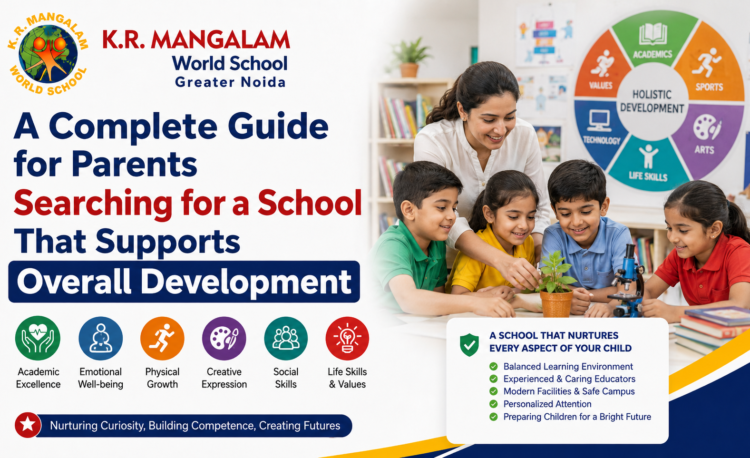
Introduction:
Choosing a school is one of the biggest decisions parents make for their child. And honestly, it can be difficult when every school talks about academics, activities, technology, sports and modern classrooms. So, how do you know what actually matters?
At KR Mangalam World School, Greater Noida where the answer is to look beyond marks and facilities. A school that supports overall development should help children grow intellectually, emotionally, socially and physically while also encouraging curiosity, creativity and responsibility.
For parents comparing Good Schools in Greater Noida Extension, the right choice should be a place where children feel safe, supported and excited to learn. Let’s break down the important factors that deserve your attention.
Start With Your Child’s Needs
Before shortlisting schools, start by understanding your child.
Is your child naturally confident or more reserved? Do they enjoy sports, art, technology or reading? Do they learn quickly through activities, conversations or hands-on experiences?
Every child has different interests, learning preferences and strengths. A suitable school should provide enough flexibility and opportunities for children to discover what they enjoy instead of expecting every learner to develop in exactly the same way.
Parents can think about:
- Learning interests and personality
- Communication and social comfort
- Creative and sporting interests
- Areas where additional guidance may be needed
- Long-term academic and personal goals
When parents understand their child first, comparing schools becomes much more purposeful.
Look at the Curriculum and Teaching Approach
A school may have an impressive syllabus, but the more important question is: How is that syllabus taught?
Children need opportunities to understand concepts, ask questions, experiment and apply what they learn. A strong learning environment can combine classroom instruction with projects, discussions, activities and practical experiences.
The school’s stated approach focuses on a skill-based curriculum and competency-based pedagogy, with the aim of keeping learners actively and joyfully engaged. Its educational philosophy is built around Learn, Explore, Innovate and Evolve.
This can help children move from simply receiving information to becoming active participants in their learning.
Check Whether the School Supports More Than Academics
Overall development does not happen through textbooks alone.
Children need opportunities to communicate, collaborate, lead, create and understand themselves. Look for programmes that deliberately build these abilities instead of treating them as occasional extras.
The school offers programmes covering engaging communication, STEAM, leadership, socio-emotional and ethical learning, language and literature, creativity, media and information learning and art-integrated learning.
A balanced school experience can help children develop:
- Communication skills
- Leadership qualities
- Creativity
- Emotional intelligence
- Teamwork
- Problem-solving abilities
- Ethical awareness
These skills can influence how children approach both academic challenges and everyday situations.
Why Should Parents Pay Attention to Emotional Development?
A child’s emotional well-being can have a direct impact on their learning experience.
Children should feel comfortable asking questions, expressing concerns and making mistakes without feeling embarrassed. A supportive school environment can help students understand their emotions, develop resilience and learn how to respond to setbacks.
The school states that it aims to provide a safe and nurturing environment while developing self-motivated future learners with leadership skills, emotional intelligence and tolerance.
For parents, this is an important indicator of whether a school genuinely views education as holistic.
Don’t Ignore Sports, Creativity and Co-Curricular Activities
A child’s day should not revolve entirely around academic work.
Sports can develop discipline, teamwork and perseverance. Art, music, theatre and creative activities can encourage self-expression. Competitions, assemblies and celebrations can help children build communication and confidence.
The school website highlights a culture of creativity, art-integrated learning, leadership opportunities and numerous educational and student activities. Recent activities include investiture programmes, book exhibitions, innovation showcases, sports and awareness initiatives.
These experiences can make school life more engaging while giving children different ways to discover their strengths.
Consider Safety, Infrastructure and the Learning Environment
Safety should never be treated as an optional feature.
Parents should look at the condition of classrooms, activity areas, sports facilities, medical support, hygiene and general campus management. A stimulating learning environment should also be comfortable enough for children to concentrate, interact and explore.
The reference article recommends checking child-safe infrastructure, clean spaces, medical support and learning areas during a school visit.
Also consider:
- Classroom environment
- Indoor and outdoor activity spaces
- Sports facilities
- Safety systems
- Medical arrangements
- Cleanliness and hygiene
A safe environment gives children the confidence to participate fully.
Visit the School Before Making the Final Decision
Online research is useful, but it cannot replace visiting the school yourself.
Observe the atmosphere. Notice how children interact with teachers. Look at the classrooms. Ask questions about curriculum, assessment, safety, activities and communication with parents.
The reference guide similarly recommends visiting the school and observing whether children appear happy, engaged and comfortable in the environment.
Also consider practical factors such as transport, distance, fee structure and communication systems. A school should offer value that makes sense for your family’s expectations and long-term needs.
Conclusion:
Finding a school that supports overall development is not about choosing the one with the longest list of facilities. It is about finding an environment where academics, emotional well-being, social learning, creativity, technology, sports and values work together.
For parents considering Good Schools in Greater Noida Extension, the best approach is to look at the whole picture: understand your child, evaluate the teaching approach, meet the teachers, visit the campus and examine how the school prepares children for both learning and life.
At KR Mangalam World School, Greater Noida, the right school does more than teach lessons. It helps children discover who they are, what they can do and how they can contribute to the world around them.
FAQs:
1. What should parents consider when choosing a school for overall development?
Parents should look beyond academics and consider teaching methods, emotional support, communication, sports, creative activities, technology, safety and opportunities for leadership.
2. How can parents understand whether a school matches their child’s needs?
Parents can consider their child’s personality, interests, learning preferences and areas where additional support may be needed. Visiting the campus can also help families understand the school environment.
3. Why are extracurricular activities important for children?
Sports, art, music, theatre and other activities can strengthen confidence, creativity, teamwork, discipline and self-expression while providing opportunities beyond regular academics.
4. How important is the teacher’s role when selecting a school?
Teachers have a major influence on how children experience learning. Parents should look for educators who encourage questions, communicate respectfully and provide constructive guidance.
5. Should parents visit a school before admission?
Yes. A visit can help parents observe classrooms, student behaviour, teacher interaction, safety measures and activity spaces. It also allows them to ask practical questions before making a decision.
6. What makes a school suitable for a child’s long-term development?
A suitable school should provide a balanced environment where academics, emotional well-being, social skills, creativity, physical activities, values and future-readiness are developed together.